


What 19 Years With One Company Taught Me About Customer Service, Company Culture, and Brand
There was a knock on the door.
I was away for the weekend near Calaveras Big Trees State Park in California (I love this part of the world!), staying at one of those places that was somewhere between a motel and a collection of cabins.

There were no phones in the rooms.
Cell service? I don’t remember there being any. This was nearly 20 years ago, back when going away for the weekend could still mean you were actually away. So when there was a knock on the door one morning, it was someone from the office.
“There’s a guy on the phone who says he’s your nephew.”
Oh boy.
My nephew wasn’t calling to say hello.
One of our clients had a large e-commerce website. The client was a successful businessman with several companies, and this particular website was important to his business.
It was down.
Completely down.
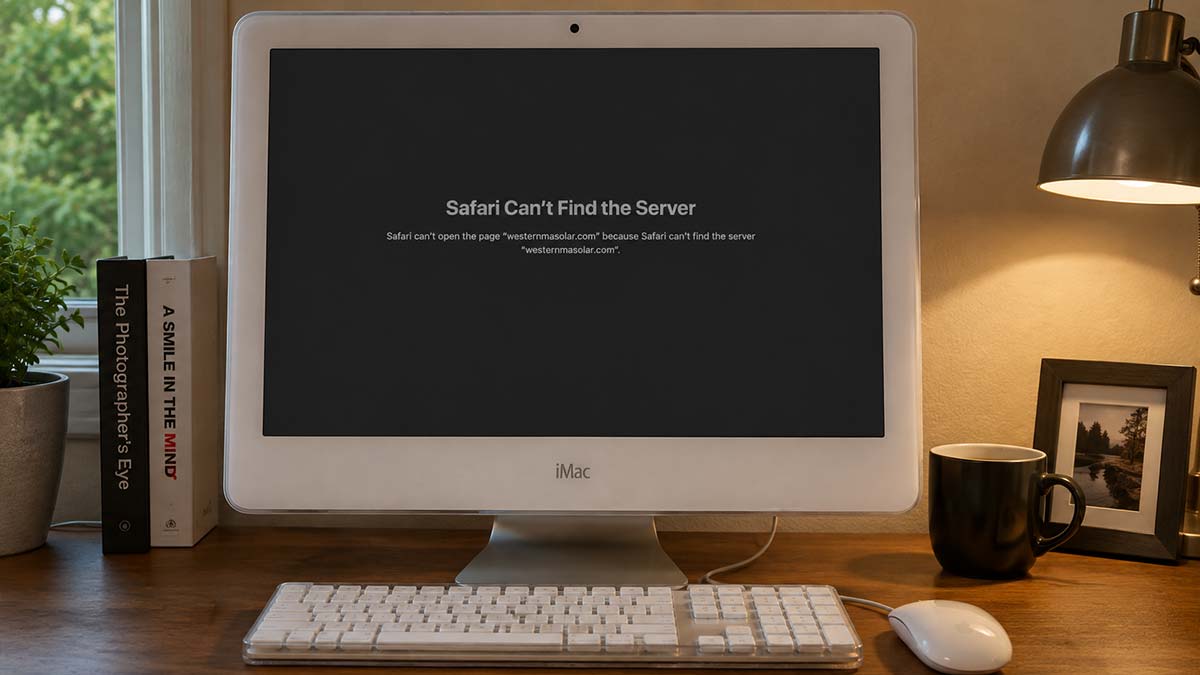
And I was standing near a grove of giant sequoias with no computer, no internet access, and apparently my nephew serving as some kind of emergency communications director.
There was absolutely nothing I could do to fix it myself.
But I had recently moved my own hosting to InMotion Hosting.
So I called them.
I don’t remember every technical detail of what happened next. It was almost two decades ago. I remember giving somebody a credit card number over the phone. I was able to use a computer in the motel office, so I could get InMotion the credentials for the existing hosting account and, once everything was ready, update the DNS records.
But that was about the extent of what I could do.
InMotion configured the new server, set up the domain, transferred the site files, and made sure the whole thing worked. I couldn’t download anything. I couldn’t transfer anything. I couldn’t configure a server. I didn’t have my computer with me, and even if I’d had one, there was no internet connection in the room.
At that point, this wasn’t Cider House Media with a development team behind me. There was no team. There wasn’t even an Elizabeth yet.
It was just me.
And I was standing in a motel office in the Sierra Nevada foothills with a telephone and somebody else’s computer. Without InMotion doing everything on the back end, I would have been dead in the water. Instead, the website came back online.
That’s the kind of customer service you remember 19 years later.
Technically, That Wasn’t the Beginning
Our relationship had started a little earlier.
We’d had a dedicated server at another hosting company fail. There were something like 90 websites on that server, and InMotion helped us move the whole operation onto a new dedicated server with them.
That was the beginning of the account.
The phone call from Calaveras was probably when I started understanding what kind of company we’d moved to.
InMotion was much smaller then. Small enough that I remember chatting with co-founder Sunil Saxena on Twitter and getting responses directly from him. I believe he was handling the account himself at the time.
But here’s the strange thing.
InMotion got bigger.
A lot bigger.
Our business changed. Our hosting needs changed. The websites got more complicated. We added servers, VPS accounts and all sorts of things I couldn’t possibly have imagined needing when we first started working with them.
And yet the thing I experienced standing in that motel office never really went away.
Then This Showed Up in the Mail
A few weeks ago, I received a postcard from InMotion.
Thank You For Your Business.
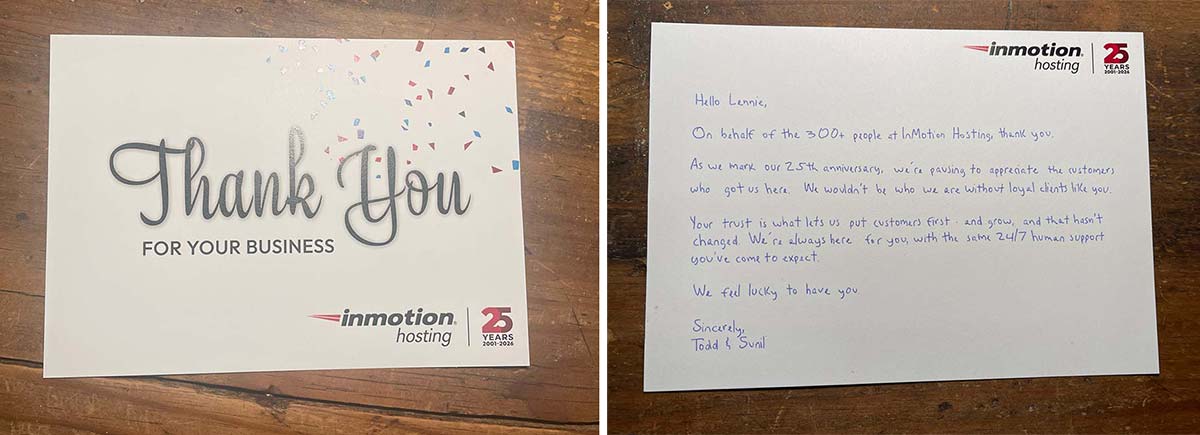
On the back was a handwritten note from Todd Robinson and Sunil Saxena, the company’s founders. It thanked me for being part of InMotion’s first 25 years and talked about the customers who helped them get there.
One sentence particularly jumped out at me.
They talked about providing the same 24/7 human support their customers had come to expect.
That got me.
Because that’s not a marketing promise I was reading for the first time. I’d already spent 19 years experiencing it. InMotion today says it serves more than 170,000 customers with a team of more than 300 people. It’s still privately owned, founder-led and independent. That’s a very different company from the one I remember chatting with on Twitter almost two decades ago.
And yet here I was holding this handwritten postcard.
I thought it was pretty cool.
“You’ve Been With Us for 19 Years?”
Not long afterward, I happened to call InMotion about something completely unrelated.
One of our clients, Hilltown Families, needed a more robust hosting solution, and I was calling to talk through VPS pricing.
The rep pulled up my account.
There was a pause.
“Wow. You’ve been with us for 19 years.”
Yeah.
Apparently I have.
I told him about the postcard. I told him I thought it was a great gesture. We got talking about the early days, and I mentioned that I remembered interacting with Sunil on Twitter.
The rep knew exactly what I was talking about. We had a great conversation. He also told me something I found interesting. According to him, InMotion has had offers to sell the company over the years, but the founders haven’t wanted to do it because they don’t want the company to become something different.
I obviously wasn’t sitting in those meetings, so I can’t speak to the acquisition offers.
But the philosophy isn’t just something a salesperson told me.
InMotion publicly describes itself today as founder-led and independent, specifically noting that there is no private equity steering its decisions. The company connects that independence directly to its ability to think long-term and invest in customer relationships.
That matters.
Especially in web hosting.
I’ve dealt with a lot of hosting companies over the years. Some of the biggest names in the business. I’ve watched consolidation and acquisitions transform that industry.
I’m not interested in turning this into a list of companies I don’t like.
But I will say this:
InMotion’s customer service and technical support have consistently been in a different league.
And after 19 years, I’m beginning to think independence has something to do with that.
Then There Was a Box
A couple of weeks later, I took Jackson outside at night. In case you don’t know, Jackson is our Black Lab rescue, best friend, goodest boy and official office dog. And he had to pee.
I didn’t notice the box at first. It was sitting off to the side of the stoop, and it was dark.

Instead, I noticed a particularly beautiful bright object in the eastern sky. I wondered what it was. So I went back inside, got my phone, pulled up the astronomy app I use and pointed it toward the sky.
Saturn.
Very cool.
Jackson finished what we’d gone outside for, and we headed back toward the house.
That’s when I saw the box.
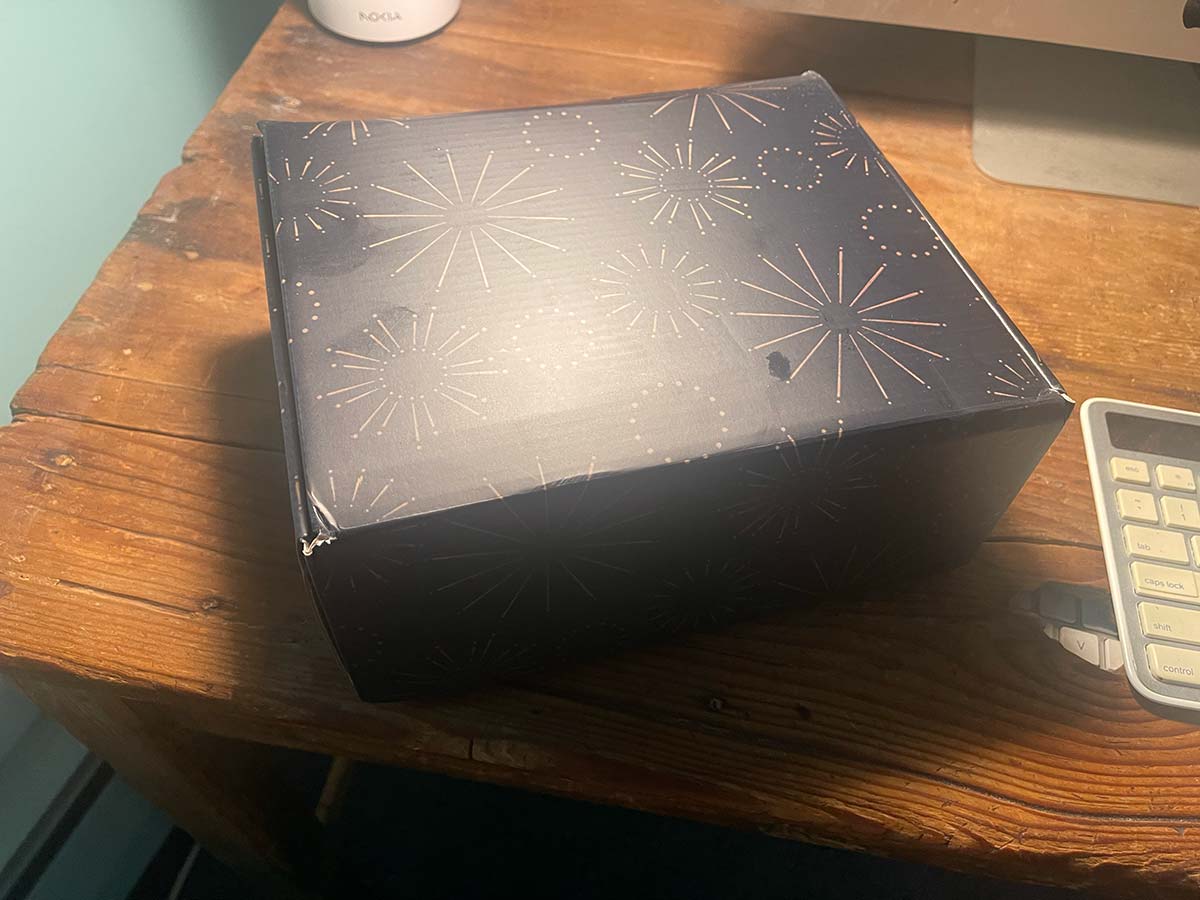
I assumed it was Elizabeth’s.
Elizabeth does most of the household online ordering, so mysterious boxes arriving at our house generally have nothing whatsoever to do with me.
Except this one had my name on it.
Huh.
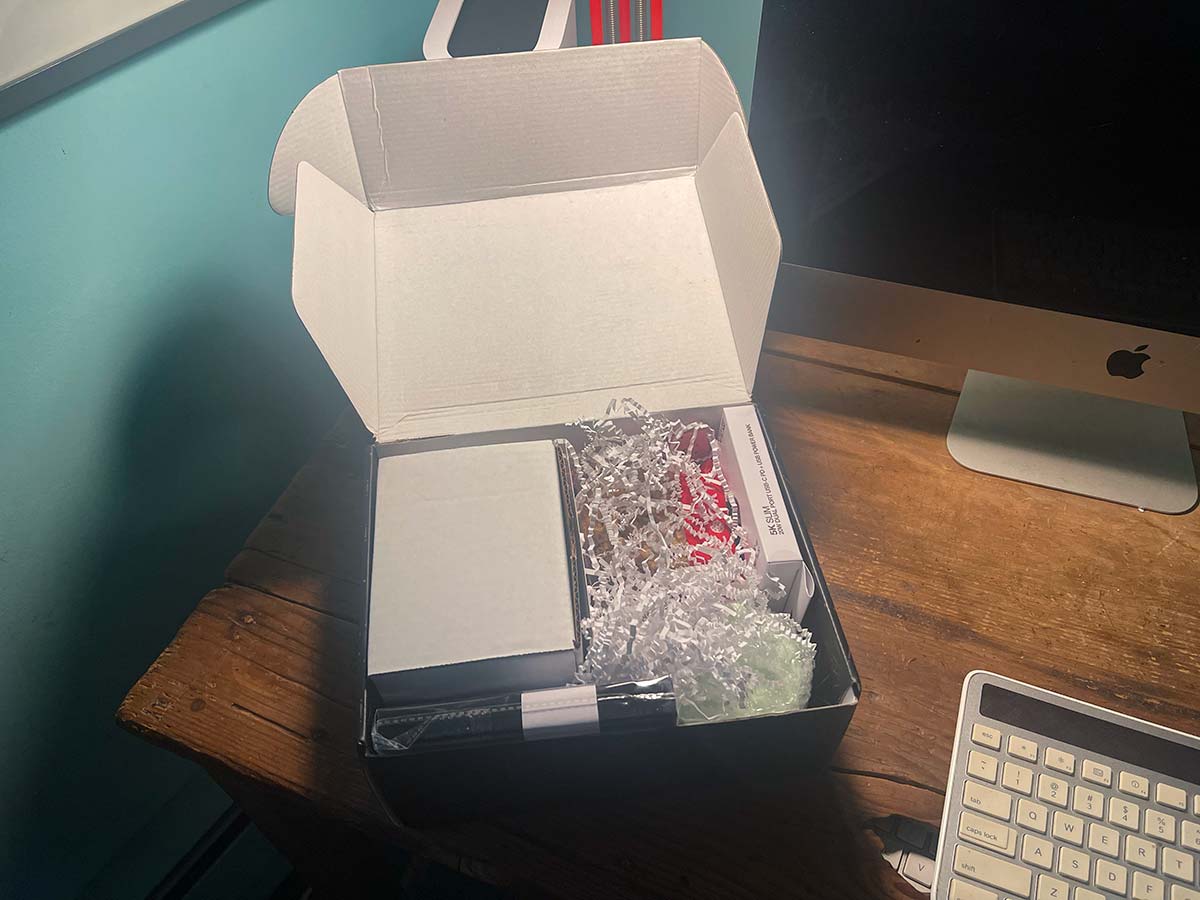
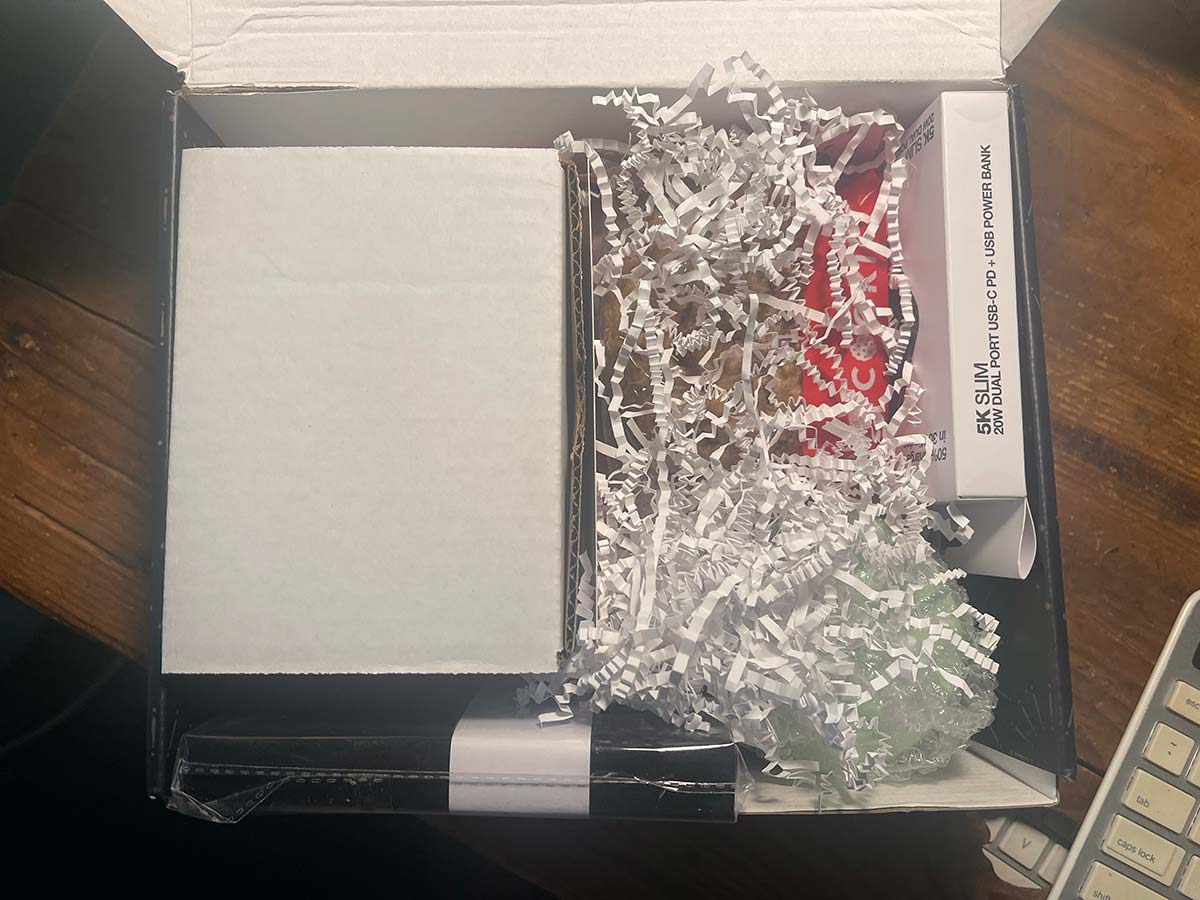
Later that night, I opened it.
There wasn’t any branding on the outside that I had noticed, so at first I still wasn’t quite sure who had sent it.
Then I started unpacking.
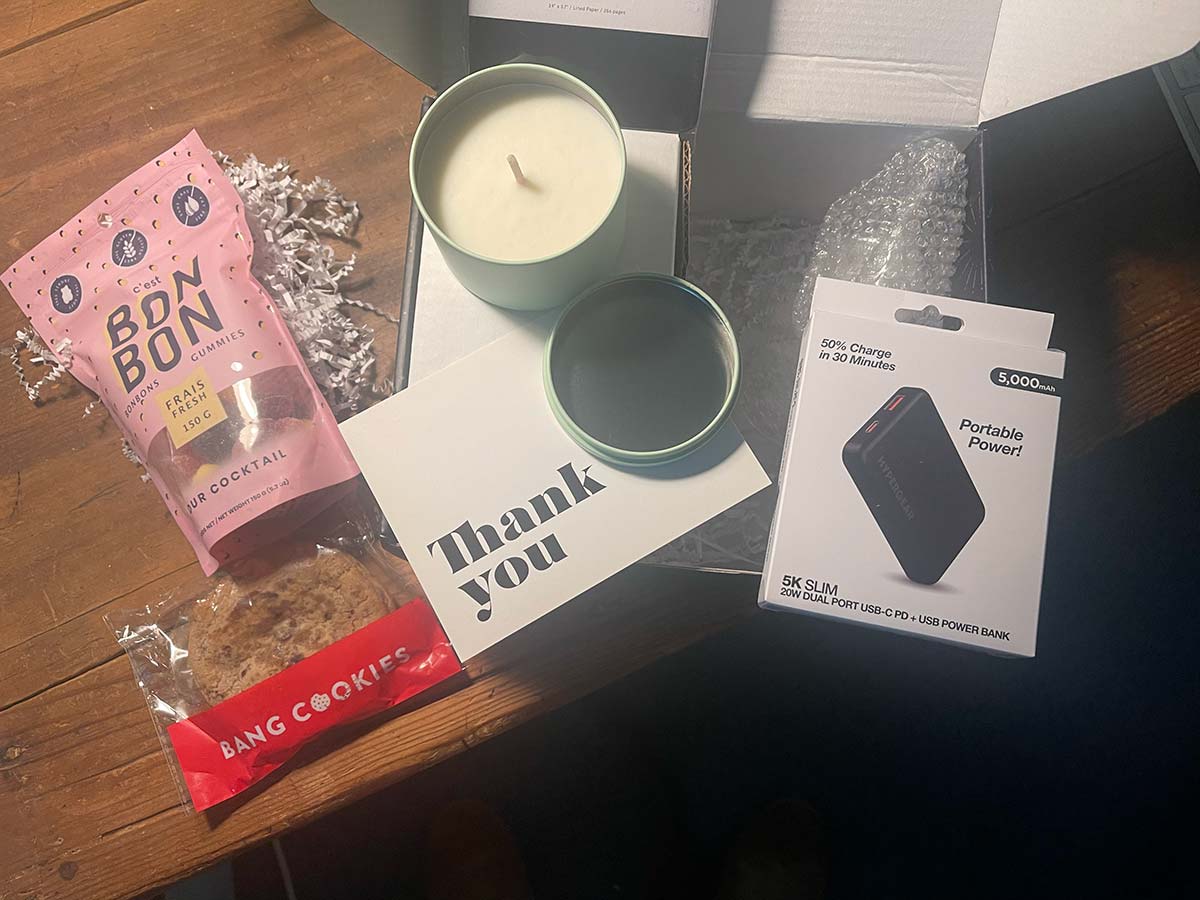
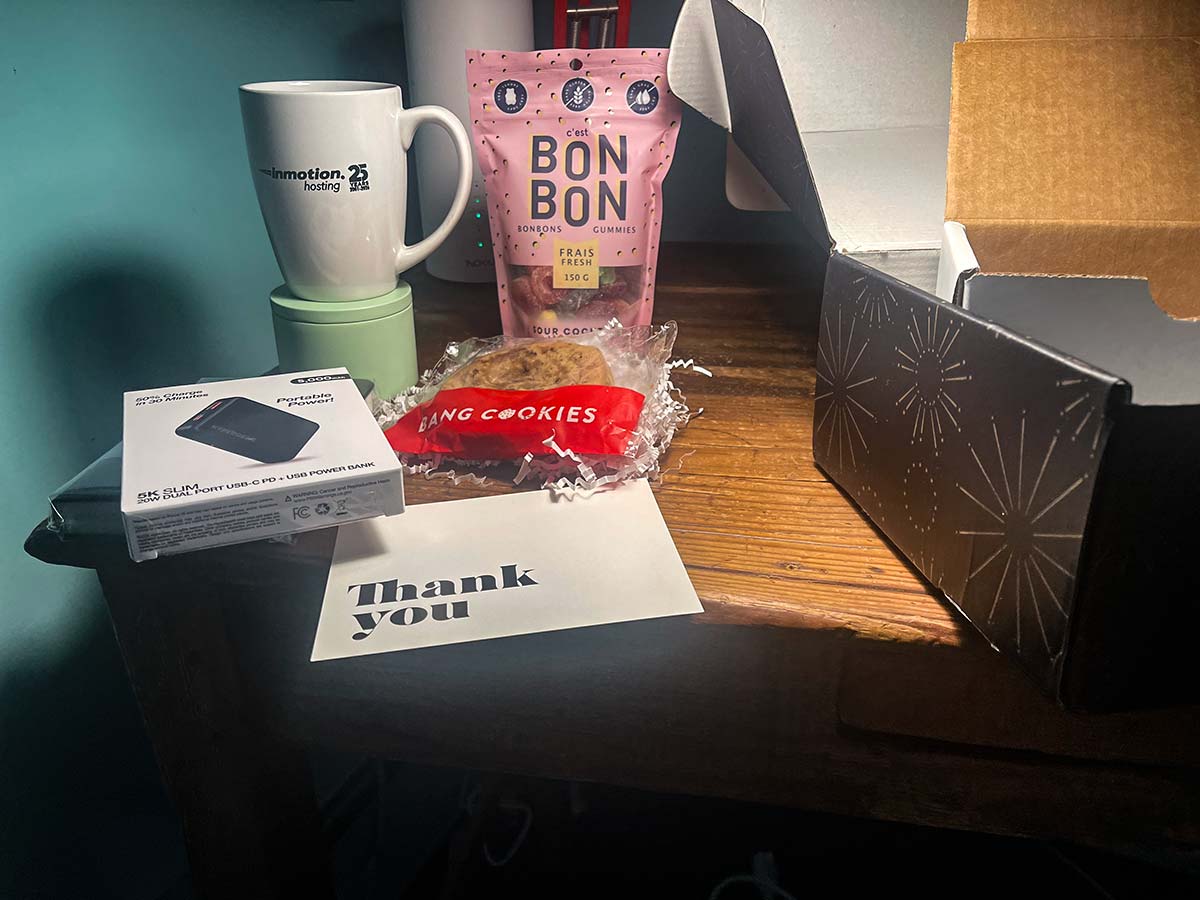
A mug. A notebook. A charger. Candy. A cookie.
And another note from Todd and Sunil. Inmotion Hosting strikes again.
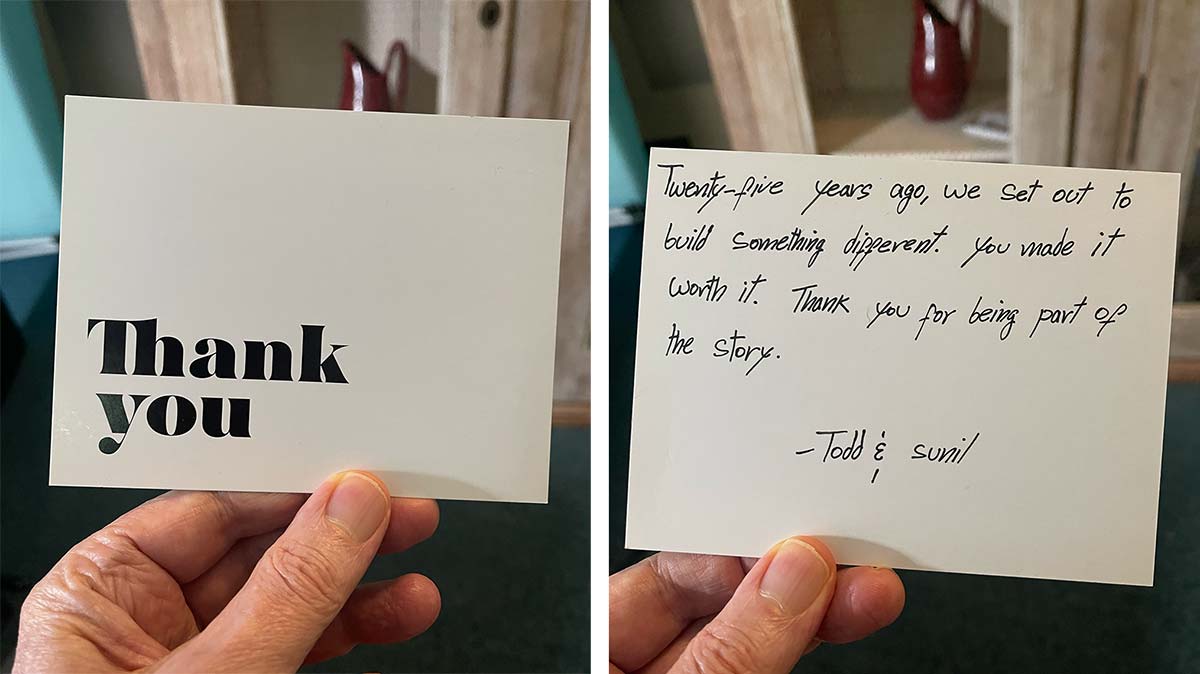
Twenty-five years ago, we set out to build something different. You made it worth it. Thank you for being part of the story.
Well, that’s nice.
Really nice.
But here’s the thing.
The box didn’t create the loyalty.
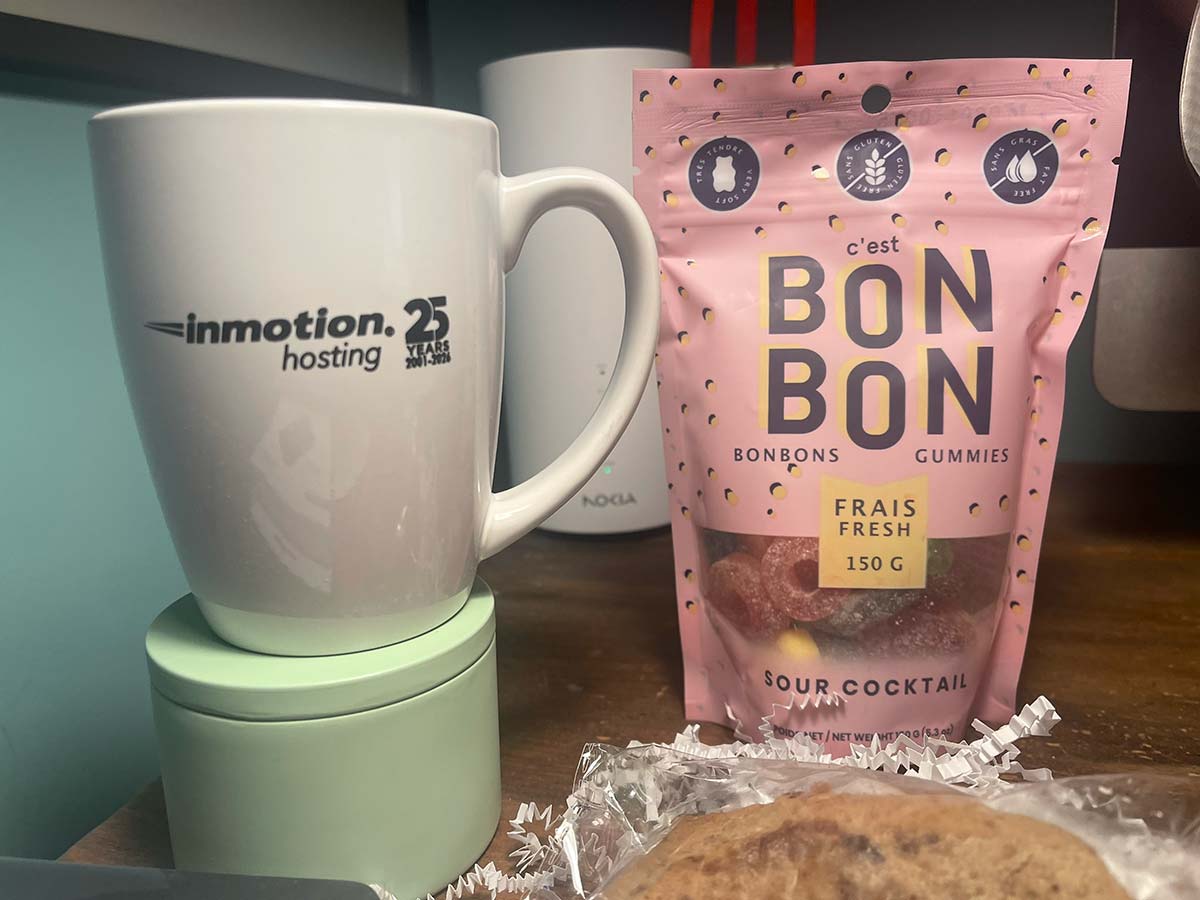
You Can’t Buy 19 Years of Loyalty With a Cookie
I loved the box.
I love the mug.
I’m certainly not going to complain about someone sending me candy.
And, damn, that cookie was delicious! Yes, we shared the cookie.
But if I’d spent the previous 19 years being frustrated with InMotion, none of that would have meant very much.
It might even have felt like marketing.
Instead, it felt like appreciation.
There’s a huge difference.

A year or so ago, I wrote about an experience I had at Starbucks after I accidentally bought a bag of decaf coffee.
Yes.
Decaf.
I still don’t like talking about it.
The interesting part of that story wasn’t the coffee. It was what happened when I went back. I hadn’t complained. Starbucks hadn’t done anything wrong. I’d bought the wrong coffee. But the barista immediately offered to exchange it. Her instinct wasn’t to determine whose fault it was. Her instinct was to help. I wrote at the time that culture shows up not in taglines or mission statements, but in moments.
I’ve been thinking about that again. Because those moments don’t happen by accident.
Customer Service Is a Neon Sign for Your Brand
We talk about branding all the time at Cider House.
Logos. Colors. Typography. Websites. Messaging. Photography. Advertising.
All important.
But you know what broadcasts your brand values louder than almost any of those things?
The person answering the phone.

Customer service is a giant neon sign shouting your brand values to the world.
Your customer doesn’t experience your mission statement.
They experience Jennifer in accounting.
They experience the salesperson who tells them they don’t need the more expensive option.
They experience the technician who stays with a problem because they genuinely want to figure out why something isn’t working.
They experience the person at the front desk who remembers their name.
Years ago, when Elizabeth and I first moved to Easthampton, we weren’t sure whether we were going to live here full-time or split our time between Massachusetts and California. We’d had a wonderful relationship with First Bank in Los Angeles. But there wasn’t one here, so we opened an account with Bank of America because it gave us access to our money on both coasts. There was also a local bank in Easthampton that we really wanted to use.
But Bank of America was practical.
Then something unexpected happened.
One teller at our local branch got to know us.
She knew our names. She knew our business. She understood our accounts. She gave us such personal attention that if there were several people in line, we’d wait for her window rather than go to someone else.
One employee created that much loyalty to one of the largest banks in the world.
Then she left.
And so did we.
We moved everything to the local bank.
Think about that.
One employee had become the brand.
The Best Employees Usually Care About Something
I’ve worked with hundreds of businesses and organizations over the years. And one of the things I’ve come to believe is that most people who build good businesses aren’t doing it simply because they want to make money.
Of course they want to make money. You have to.
Employees need to get paid. The rent needs to get paid. You’d presumably like to take some money home yourself. But money alone rarely explains why the good ones keep doing what they do.
There’s something else there.

A good roofer likes building things and solving problems.
A remodeler loves taking something that doesn’t work and figuring out how to make it work beautifully.
A restaurant owner wants you to love the food.
A doctor wants to help a patient.
Someone running a nonprofit, library, arts organization or community television station believes that what they’re doing matters to their community.
Even insurance.
Maybe nobody grows up dreaming about insurance policies. But I’ve met insurance people who genuinely love figuring out what someone needs and making sure they’re protected.
And hosting?
Let’s face it.
Web hosting isn’t particularly sexy.
But get one of InMotion’s technical people on the phone with an interesting server problem and you can hear it.
They want to figure it out.
They know their stuff.
And apparently that’s deliberate.
InMotion says its support specialists go through extensive technical training before handling customer tickets, and its support team averages more than five years of tenure. The company also says employees are empowered to fix problems rather than simply upsell customers.
That last part rings particularly true to me.
I’ve dealt with their salespeople for years.
They sell.
Of course they do.
But my experience has been that they’ll also tell me when I don’t need something.
That’s how you get me to buy from you again.
Management Can’t Manufacture Passion
I waited tables for about seven years when I was younger.
I loved it.
Seriously.
I loved serving people great food. Someone would ask, “What should I order?” And if there was something on that menu I loved, I’d light up.
“Oh my God. You have to try this.”

I wasn’t following a customer-service script.
I meant it.
Eventually I left because I couldn’t make the living I wanted waiting tables, and I desperately wanted to work in the film business. But I never stopped understanding why people love restaurant work.
There’s satisfaction in making somebody happy.
You can’t train that into somebody with a PowerPoint presentation.
But you sure can train it out of them.
Bad management can bury caring people under quotas, scripts, bureaucracy, impossible workloads and rules that prevent them from doing the thing they know would help the customer.
Good management does something else. It gives that instinct somewhere to go.
The Hard Part Is Growing Without Losing the Heart
We’ve seen this with our own clients.
Local Burger is a great example.
They have four locations. They’ve been careful about growth because what they’ve built isn’t simply a restaurant concept that can be stamped out anywhere someone has enough money to buy a franchise.
There has to be buy-in.
There has to be trust.
They’re now moving into employee ownership, which takes that idea of buy-in and makes it very real.
It’s not just a franchise.
It’s a heart.
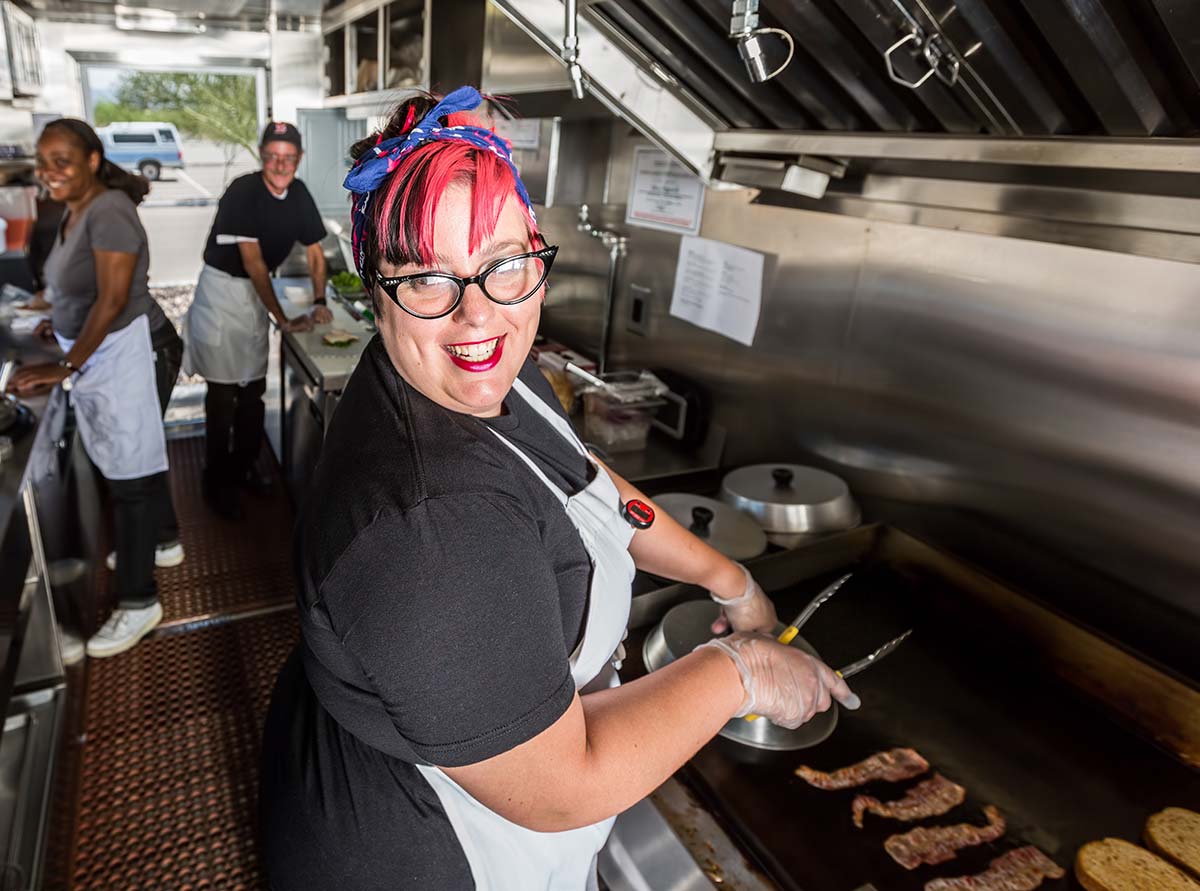
And hearts are difficult to scale.
That’s the problem every successful business eventually encounters.
How do you grow without losing the thing that made people love doing business with you in the first place?
How does the person answering the phone understand what your company stands for?
How does the salesperson know when not to make the sale?
How does an employee know they’re allowed to solve the customer’s problem?
How do you hire people who care and then build a company that doesn’t teach them to stop caring?
This isn’t just a small-business question.
In some ways, it gets harder as you get bigger.
InMotion started in 2001 with Todd Robinson and Sunil Saxena and today has more than 300 team members serving more than 170,000 customers. Yet 25 years later, it remains founder-led and independent.
Sunil has a line on the company’s website that may be one of the best descriptions of company culture I’ve ever read:
“We are a customer service company that happens to offer web hosting.”
That’s brilliant.
Because the server isn’t really the brand.
The relationship is.
Culture Is What Escapes From Inside the Building
We try to do the same thing at Cider House.
On a considerably smaller scale.
But the culture part? Absolutely.
When someone hires us, I want the experience of working with our team to feel different.
I want people to care about the client’s business. I want someone to notice the thing that wasn’t technically part of the assignment but probably needs attention anyway. I want us to tell a client when we think they don’t need to spend the money.
Do we always get everything right?
Of course not.
Neither does InMotion.
Neither does Starbucks.
Neither does any business.
We’ve had client relationships over the years where we simply didn’t mesh. Different personalities. Different expectations. Different ways of working.
That’s life.
What’s remarkable to me after working with hundreds of businesses and organizations isn’t that I’ve occasionally had a difficult relationship.
It’s how rarely I’ve encountered people who simply didn’t care. Most people care deeply.

The challenge for a growing company is creating an internal culture that allows that caring to become infectious. Because eventually it escapes.
Your employees carry it outside the walls. Your customers feel it.
And that becomes your brand.
Back to the Box
So yes, InMotion sent me a box.
There was a mug.
A notebook.
A charger.
Candy.
A cookie.
And some very thoughtful words from two guys whose company I’ve watched grow for most of its existence.
I’m grateful for all of it.
But the thing I appreciate most didn’t come in the box.
It happened almost 20 years ago in a motel office near Calaveras Big Trees, when I had a client’s website down and absolutely no way to fix it myself.
It has happened late at night when something went wrong with a server.
It’s happened when a salesperson told me what I needed instead of what cost more.
It’s happened through countless support calls with people who knew their jobs and seemed genuinely interested in solving the problem.
And it happened again when an account rep pulled up my record and seemed genuinely surprised that I’d been there for 19 years.
The box was a wonderful gesture.
But it wasn’t why I stayed.
It reminded me why I’d already stayed.
Twenty-five years after Todd and Sunil started the company, InMotion says it’s still independent, still founder-led and still committed to expert human support.
From where I’m sitting, they’ve managed something even harder.
They grew the company without completely growing out of the company they started.
And whether you run a web hosting company, a restaurant, a roofing business, a bank, a design agency, a nonprofit or the coffee shop down the street, that’s worth paying attention to.
Because your customers are always learning what your brand stands for.
Usually from your people.
Sometimes from a postcard.
And every once in a while, from a box you almost missed because you were outside looking at Saturn.
